
While both clean dishes, a commercial dishwasher and a residential one are fundamentally different machines built for entirely distinct purposes. As a leading commercial dishwasher manufacturer, V-TAI often encounters the misconception that they’re interchangeable. However, understanding their core differences is crucial for any business considering a dishwashing solution. Let’s delve into what sets these two categories of dishwashers apart and why choosing the right one is critical for your operation’s success.
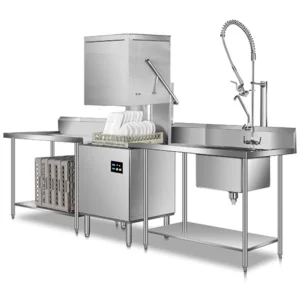
Designed for Different Demands: Speed, Capacity, and Durability
The most striking differences between commercial dishwashers and residential units stem from their intended use: volume and speed.
- Speed and Cycle Times: This is perhaps the most critical distinction. Residential dishwashers typically run cycles lasting 1-2 hours. In contrast, commercial dishwashers are built for speed, completing full wash and sanitize cycles in mere minutes—often as little as 90 seconds to 3 minutes. This rapid turnaround is non-negotiable for busy establishments like fast food chains, coffee chains, and bustling hotels & resorts where dishes are needed continuously.
- Capacity and Throughput: A residential dishwasher might handle 10-14 place settings per cycle. Commercial dishwashers, however, are designed for massive throughput. Our undercounter dishwashers can process dozens of racks per hour, while hood type dishwashers handle hundreds, and conveyor dishwashers or flight type dishwashers can clean thousands of dishes per hour, essential for central kitchens, airline catering centers, and large-scale food processing plants.
- Construction and Durability: Residential models are built for occasional use in a home setting. Commercial dishwashers, as part of industrial cleaning equipment, are constructed with heavy-duty, commercial-grade components and robust stainless steel. They’re designed to withstand continuous operation, harsh commercial detergents, and the rigorous demands of professional kitchens, ensuring years of reliable service with proper maintenance.
The Crucial Role of Hygiene and Sanitation
While residential dishwashers aim for cleanliness, commercial dishwashers adhere to stringent health and safety standards that are legally mandated for food service operations.
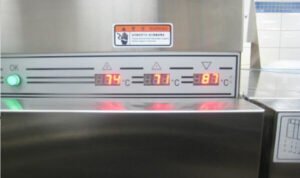
- Sanitization Temperatures: This is a non-negotiable difference. Residential dishwashers typically wash at lower temperatures and may or may not reach temperatures sufficient for true sanitization. Commercial dishwashers, especially those for hot water sanitization, are engineered to reach and maintain specific, high temperatures (e.g., 82-88°C / 180-190°F in the final rinse) to effectively kill bacteria and pathogens. This critical sanitization step is vital for public health and is a hallmark of V-TAI industrial cleaning equipment.
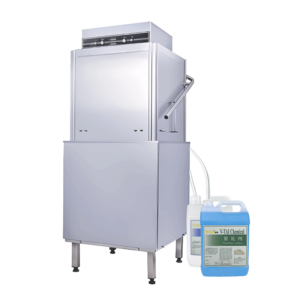
- Detergents and Chemicals: Commercial units use specialized, potent detergents and rinse aids formulated for rapid action and powerful cleaning in high-temperature environments. These are often automatically dosed through integrated dispensers, ensuring consistent and effective results.
Resource Demands and Specialized Features
- Water and Power Consumption (Per Item): While commercial dishwashers use more water and power per cycle than residential units, they are significantly more efficient per item washed. Their powerful pumps and rapid heating elements consume more energy in a shorter burst but deliver a far greater output, making them highly efficient for high-volume needs.
- Specialized Features:Commercial dishwashers often include features tailored for professional needs:
- Heat Recovery Systems: Like those in some of our hood type and 3-door hood type models, these recapture waste heat to pre-warm incoming water, significantly reducing energy costs.
- Built-in Dispensers: For precise and automated dosing of chemicals, ensuring optimal results and safety.
- Specific Rack Designs: For various items like glasses (in undercounter glass washers), pots (commercial pot washers), or entire baking trays (roll-in rack washers).
The Bottom Line: Choosing for Business Success
Attempting to use a residential dishwasher in a commercial setting would quickly lead to overwhelming backlogs, failing health inspections, and premature equipment breakdown. The choice between a commercial dishwasher and a residential one isn’t about preference; it’s about matching the tool to the task.
For any business, from a busy bakery & patisserie to a large supermarket deli, investing in the right industrial cleaning equipment like a V-TAI commercial dishwasher is an investment in compliance, efficiency, and long-term profitability. It ensures that your operation can consistently meet the highest standards of cleanliness and keep pace with demand, allowing your team to focus on what they do best: serving your customers.