
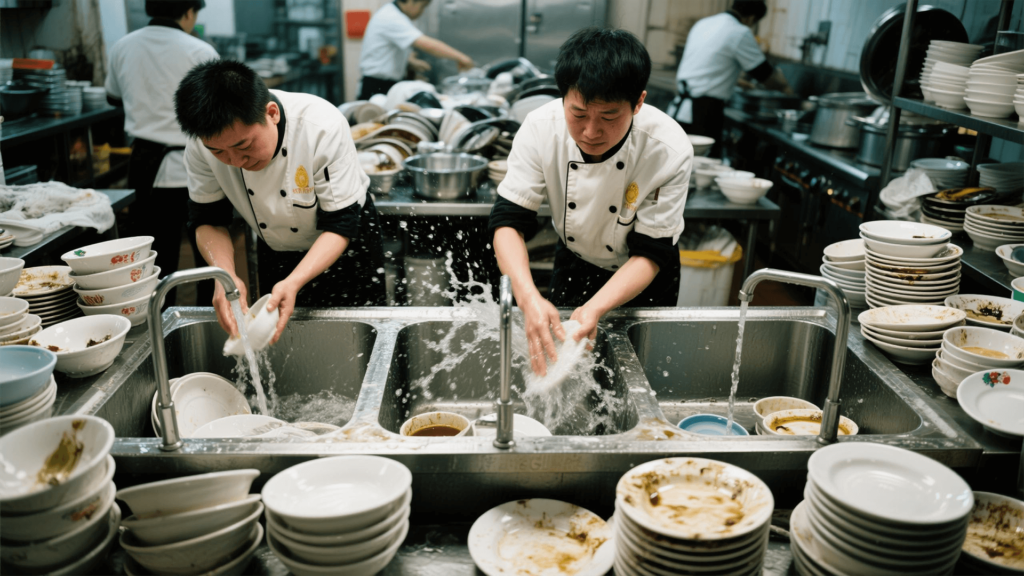
The 3 compartment sink is a cornerstone of many commercial kitchens, mandated by health codes worldwide for manual warewashing: Wash, Rinse, Sanitize. It’s a familiar process, but in today’s fast-paced food service environment, is it always the most efficient or cost-effective solution? As labor costs rise and utility expenses fluctuate, many operators are evaluating the benefits of upgrading to automated systems like a V-TAI commercial dishwasher.
This post dives into a head-to-head comparison, examining the true costs and operational efficiency of relying solely on a 3 compartment sink versus integrating a modern commercial dishwasher from V-TAI.
Disclaimer: Specific cost savings, water, and energy usage can vary significantly based on local utility rates, labor costs, equipment models, usage patterns, and water hardness. The figures and ranges mentioned below are illustrative estimates based on industry knowledge and publicly available data sources (like Energy Star) where possible, intended for comparison purposes. For precise calculations tailored to your operation, we recommend a personalized assessment.
The Manual Method: Understanding 3-Compartment Sink Operations
The three-bay sink method is essential for proper manual cleaning and sanitization. However, its effectiveness and cost depend heavily on human factors and resource consumption:
- Labor Intensive: Manual washing is undeniably time-consuming. Staff must scrape, wash, rinse, sanitize, and air-dry items, often handling one rack or a small batch at a time.
- Variable Costs: Water usage can be high, especially if faucets are left running during rinsing. Energy is consumed to heat large volumes of water for washing and sanitizing rinses. Detergent and sanitizer usage can be inconsistent.
- Inconsistent Results: Maintaining required water temperatures (especially for sanitizing rinses) and sanitizer concentrations manually can be challenging throughout a busy shift, potentially impacting food safety compliance.
- Workflow Bottlenecks: During peak hours, the sink area can easily become a bottleneck, slowing down operations and requiring dedicated staff attention.
The Automated Advantage: V-TAI Commercial Dishwashers
V-TAI offers a range of commercial dishwashing equipment, from compact undercounter dishwasher and glass washer models ideal for bars and smaller cafes, to robust hood type dishwasher units for restaurants and larger canteens. These machines automate the wash, rinse, and sanitize process, offering several key advantages:
- Speed & Consistency: Wash cycles typically range from just 1-3 minutes, delivering consistently clean and sanitized results every time.
- Controlled Resource Usage: Modern dishwashers use significantly less water and energy compared to manual methods for the same volume of wares. Precise chemical dosing minimizes waste.
- Labor Optimization: Frees up staff from manual washing to focus on other value-added tasks, crucial in tight labor markets.
- Enhanced Sanitation: High-temperature models reliably reach sanitizing temperatures, while chemical-sanitizing models ensure proper chemical contact time and concentration, aiding HACCP compliance.
The Showdown: Cost & Efficiency Comparison: 3 compartment sink vs. commercial dishwasher
Let’s break down the key factors:
1. Labor Costs:
- 3-Compartment Sink: Requires constant staff attention. Washing a standard dish rack might take 5-10 minutes or more, depending on soil levels and operator speed. Assuming an average labor cost (including overheads), this translates to a significant operational expense per hour dedicated purely to manual washing.
- V-TAI Dishwasher: Reduces direct labor drastically. Staff time is primarily needed for loading and unloading racks, taking significantly less time per rack than full manual washing. A typical cycle is completed in minutes, allowing one staff member to process far more wares or perform other duties.
- Verdict: Commercial dishwashers offer substantial labor savings, often becoming the most significant factor in ROI calculations.
2. Water & Energy Consumption:
- 3-Compartment Sink: Water usage varies greatly. Filling three standard sink bowls can require 50-100 liters or more, plus continuous running water for rinsing. Heating this water consumes considerable energy.
- V-TAI Dishwasher: Modern Energy Star certified commercial dishwashers are designed for efficiency. An undercounter machine might use as little as 5-10 liters per cycle, while larger machines optimize usage based on load. High-efficiency models use significantly less water and energy than older machines or manual methods. (Source: General estimates based on Energy Star data for commercial dishwashers show potential water savings of over 50% compared to non-certified models or manual washing in some cases). V-TAI designs focus on maximizing this efficiency.
- Verdict: V-TAI dishwashers generally offer significant water and energy savings per item washed compared to typical manual sink usage, leading to lower utility bills.
3. Detergent & Sanitizer Costs:
- 3-Compartment Sink: Relies on manual dosing, which can lead to overuse or underuse of chemicals, impacting both cost and effectiveness.
- V-TAI Dishwasher: Utilizes automatic dosing systems (often integrated or used with external pumps) ensuring precise amounts of detergent and sanitizer are used per cycle, optimizing chemical usage and costs.
- Verdict: Dishwashers offer more controlled and potentially lower chemical costs due to precise dosing.
4. Speed & Throughput:
- 3-Compartment Sink: Throughput is limited by operator speed and the physical time required for the wash-rinse-sanitize steps.
- V-TAI Dishwasher: Capable of washing dozens of racks per hour (depending on the model), dramatically increasing throughput compared to manual washing, essential for high-volume operations.
- Verdict: Dishwashers provide vastly superior speed and throughput.
5. Sanitation Consistency:
- 3-Compartment Sink: Relies on staff diligence to maintain water temperatures and sanitizer levels, introducing variability.
- V-TAI Dishwasher: Automatically controls cycle times, water temperatures (for high-temp models), and chemical dosing, ensuring consistent and verifiable sanitation results cycle after cycle.
- Verdict: Dishwashers offer higher reliability and consistency for meeting food service sanitation equipment standards.
Making the Right Choice for Your Operation
While a 3 compartment sink remains a necessary component in most kitchens for certain tasks, relying on it solely for all warewashing becomes less viable as volume increases or labor costs rise.
Consider upgrading to a V-TAI commercial dishwasher if:
- You operate a medium-to-high volume establishment (restaurant, busy cafe, canteen, hotel).
- Labor costs or staff availability for manual washing are a concern.
- You want to reduce utility (water, energy) consumption.
- Ensuring consistent, high sanitation standards is a top priority.
- Kitchen workflow is hampered by manual washing bottlenecks.
V-TAI, as a commercial dishwasher manufacturer focused on providing “Global Quality at Localized Cost,” offers durable, efficient machines designed to deliver long-term value and a strong return on investment.
Conclusion
The traditional 3 compartment sink has its place, but evaluating the true costs associated with labor, utilities, and consistency is crucial. For many food service operations, investing in a V-TAI commercial dishwasher is not just an equipment purchase, but a strategic move towards greater efficiency, improved hygiene, and significant long-term cost savings.
Ready to analyze if an upgrade makes sense for you? Contact V-TAI today for a personalized consultation and explore our range of commercial washing solutions.